A practical posture routine for desk work, study and everyday movement
· Guides by SG
Part of Health & Wellness Guides

In short
The best posture routine is not a challenge to sit perfectly for eight hours. It is a simple pattern you can repeat: set up comfortably, change position often and add gentle movement as your day allows. A posture corrector can be a helpful cue along the way, but movement does the real work. The examples here are everyday guidance for otherwise well adults, not rehabilitation for kyphosis, osteoporosis or a recent injury.
Who this guide is for
You open the laptop at eight, look up at noon and realise you have barely moved. Or you are studying at the dining-room table after work while the household carries on around you. This guide is for adults who lose track of time during desk work, reading or study and want a repeatable way to break up long stretches of stillness.
If you have osteoporosis, previous spinal fractures, recent surgery or injury, dizziness, balance difficulties or exercise restrictions from a professional, ask for an individual plan before trying the movements. Children and teenagers with a visible curve need an appropriate assessment.
You do not need to buy anything to start. A workable setup and a few natural changes of activity are the foundation.
Why variety beats one perfect position
Physiotherapy researcher Peter O'Sullivan co-authored "Sit up straight: time to re-evaluate", a clinical viewpoint that challenges long-held beliefs about one correct posture. The takeaway is freeing: your spine is strong and adaptable, and regular comfortable movement matters more than holding a rigid pose.
Leon Straker and colleagues studied 20 people during two hours of seated computer work. Discomfort and some problem-solving errors increased over the session, while sustained attention and measured muscle fatigue stayed steady. It is a small laboratory study, but it supports a simple habit: change position before discomfort builds, rather than waiting until you feel stuck.
Step 1: Make the task easier before you begin
Place your screen centrally and make the text comfortable to read. Keep your keyboard and mouse within easy reach. Support your back and feet without forcing yourself into a pose. If raising a laptop makes typing awkward, a separate keyboard and mouse solve both needs at once.
At a shared table, change one thing at a time. Use stable supports, keep cables out of walkways and bring reading material closer instead of turning your head towards it for a whole session. A good starting position helps, and it is a starting point, not a position you must hold.
Step 2: Use a relaxed reset
Sit with your feet supported, or stand beside something stable if that suits you. Let your shoulders soften, look ahead comfortably and take a few easy breaths without forcing your chest up. If sitting taller makes you arch your lower back hard or lift your chin, ease off.
Think of this as a quick check-in. Notice what the task needs, make a comfortable adjustment and carry on.
Step 3: Add gentle movements
Start with two or three easy repetitions of each movement and build from there as it feels comfortable. Follow any individual advice you have been given. Stop if you notice pain, dizziness, tingling, new weakness or worsening symptoms, and seek advice if they persist.
Gentle chin tuck

Keep your eyes looking forward and gently draw your chin straight back, without tipping your head up or down. Pause briefly, then release. Let the movement come from your neck, not from pushing with your hands.
Shoulder-blade squeeze

With your arms relaxed, draw your shoulder blades slightly towards each other without shrugging or arching your back. Pause briefly and fully release. Keep it light: this is not about pinning your shoulders back for the rest of the task.
Comfortable head turns
Slowly look to one side within a comfortable range, return to centre and repeat on the other side. Skip this one if it causes dizziness or symptoms down an arm. The aim is easy, comfortable movement.
These are mobility and awareness movements. If your goal is greater strength or support for a specific condition, a physiotherapist can build a progressive plan with the right resistance, technique and recovery.
Step 4: Change activity, not just screens
The Health and Safety Executive in the United Kingdom recommends short, frequent breaks or changes of activity, giving five to ten minutes every hour as an example. Treat it as a practical benchmark and adapt it to your work and your needs.
A short walk to refill your water bottle, standing for a phone call or switching to an off-screen task all count. Scrolling your phone usually keeps you in the same position with another screen in front of you. If you already feel the need to move, do not wait for a timer.
Step 5: Decide whether a reminder helps
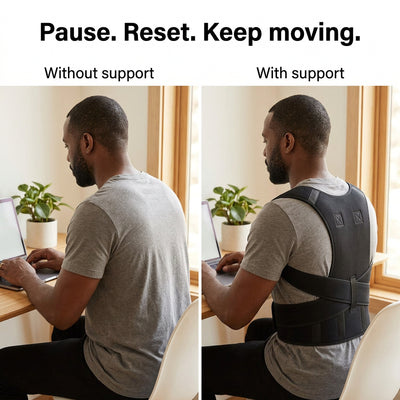
A posture corrector gives gentle contact that prompts you to check in. When you notice it, relax, look at your task and consider a movement break. That small cue can make a routine easier to remember on busy days.
- VBOSi Model 2001 offers shoulder and upper-back contact for desk work and study. View the shoulder posture corrector.
- VBOSi Model 2002 adds a longer back panel and waist fastening for broader contact. View the back posture corrector.
Choose by fit and the coverage you prefer. Follow the supplied instructions and size guide, never tighten until breathing or movement feels restricted, and remove it if you notice skin irritation, numbness, tingling or increased discomfort. A corrector supports your routine; it does not replace movement.
A simple routine for the day
- Before work: adjust your setup, check in with how you feel and pick a natural point for your first change of activity.
- During work: relax your shoulders when you notice tension, vary your position and take natural breaks away from the screen.
- After work: choose movement you enjoy. Keep any gentle practice comfortable, and note one adjustment that helped today.
For a shared home workspace, keep the essentials portable: a stable screen arrangement, reachable keyboard and mouse, and a short checklist you can repeat. When load-shedding, weather or safety make an outdoor walk impractical, moving indoors works just as well. Build the routine around your life, not an expensive equipment list.
Common mistakes to avoid
- Pushing through pain or adding repetitions every day regardless of how you feel.
- Using a strap during exercise to pull yourself further.
- Treating a routine as a four-week cure.
- Assuming all tiredness is muscular. Persistent fatigue can relate to sleep, stress, medicines or a health condition, so get it checked if it lasts for weeks or affects daily life.
If you are wondering whether a rounded upper back is more than a habit, read Rounded upper back or kyphosis? What to know before choosing support.
When to see a professional
Ask for individual advice before starting self-directed exercise if you have a diagnosed curve, fractures, osteoporosis, a recent injury or persistent pain. Book an assessment if symptoms are worsening or limiting everyday activities.
Get emergency medical help for back pain with new bladder or bowel changes, numbness around the genitals or buttocks, symptoms in both legs, chest pain, severe breathing difficulty or after serious trauma.
Frequently asked questions
Do I need to exercise every hour?
No. Regular changes of activity matter more than a fixed exercise schedule. Fit movement around natural breaks in your day.
Should a stretch hurt to work?
No. Move within a comfortable range and stop if you notice concerning symptoms.
Will this routine correct kyphosis?
This is an everyday movement routine, not a treatment for kyphosis. A diagnosed curve needs an individual assessment and programme.
Do I need a posture corrector for this routine?
No. A corrector is an optional reminder. The routine works on its own.
How quickly will I notice a difference?
Many people find breaks and position changes make long sessions feel more comfortable quite soon. Track the habits you keep and how you feel, and get persistent symptoms checked.
Share what you've learned
Everyday experience sharpens our research. If you have found a desk habit, movement or setup change that works for you, or there is a posture question you would like us to investigate, tell us what you need. Please mention this guide's title so we can connect your message to the right topic. Your input helps shape future guides and the solutions we choose.
Explore more in our Posture & Movement guides.
Sources and further reading
- Slater, O'Sullivan and colleagues, "Sit up straight: time to re-evaluate"
- Baker, Coenen, Howie, Williamson and Straker, sitting laboratory study
- Health and Safety Executive, work routine and breaks
- Royal Osteoporosis Society, posture exercises
- NHS (National Health Service) North Cheshire and Mersey, neck movement guidance
- Scapular brace typing trial
- NHS, Back pain
- NHS, Tiredness and fatigue
Shop the solution
What we recommend for this
The practical pieces that fit the routine in this guide. Choose what fills a real gap for you.